An Irish wedding is layered with custom, some of it ancient and some of it more recent, and those traditions are among the most rewarding moments to capture on film. They are the parts of the day that feel most rooted, most local, and most personal — the toast in Irish, the ring passed down a generation, the blessing spoken over a couple as they begin their life together. This guide walks through the best-loved Irish wedding traditions and offers a filmmaker’s notes on capturing each one.
Toasts and Blessings
Ireland has a deep well of wedding toasts and blessings, many of them poetic and warm. The most famous is the old blessing that begins “May the road rise up to meet you,” but there are countless others, in English and in the Irish language, that families weave into speeches and ceremonies. A blessing read aloud — by a parent, a grandparent, or a friend — is a moving moment, and it films beautifully when the words can be heard clearly. If a blessing matters to you, tell your filmmaker in advance so the audio is captured properly; a whispered blessing lost to a noisy room is a genuine shame.
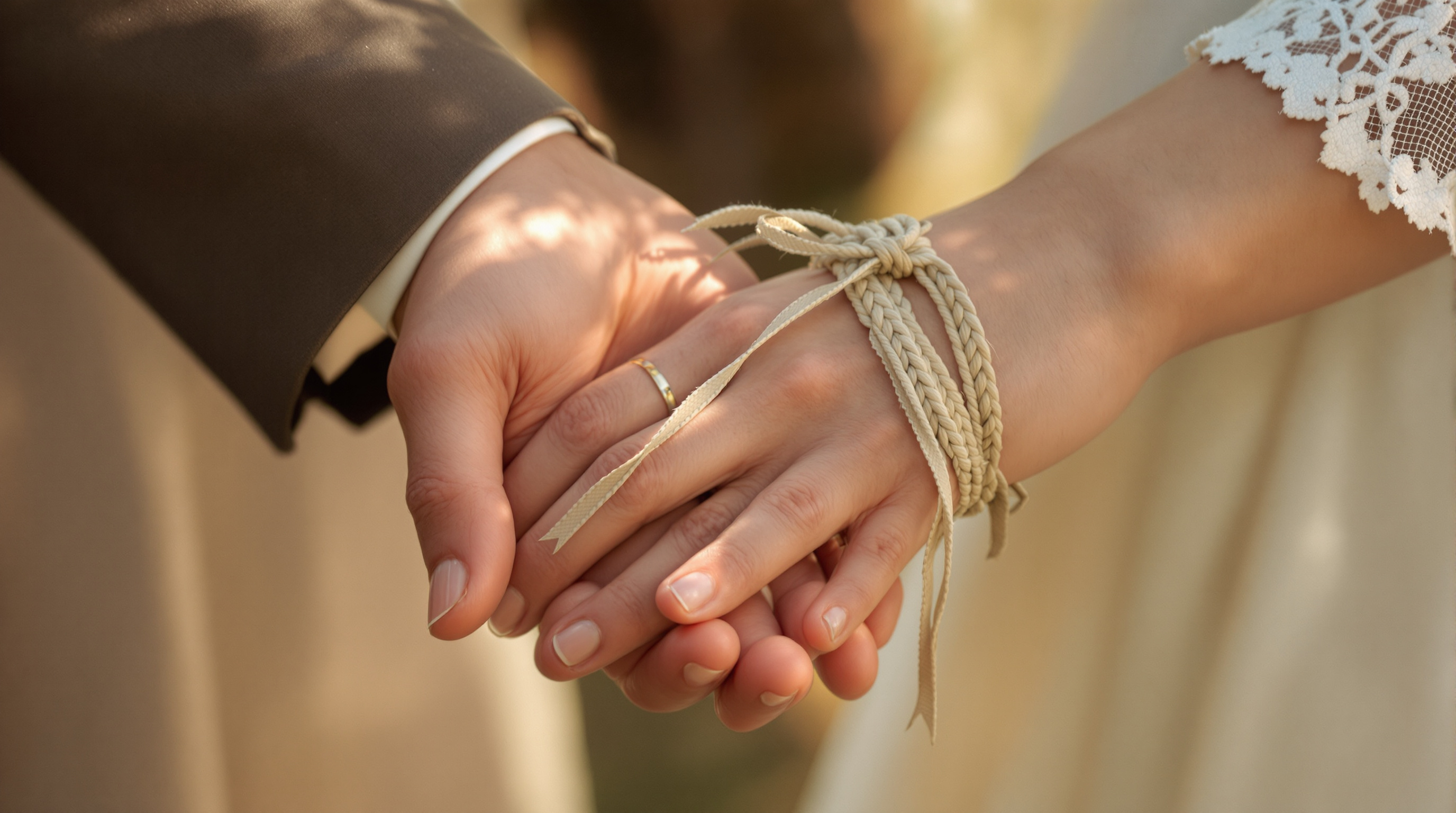
Handfasting: Tying the Knot
One of the oldest Celtic customs, handfasting is where the phrase “tying the knot” is thought to come from. The couple’s hands are bound together with a ribbon or cord as they exchange their promises, symbolising their union. It has enjoyed a strong revival in modern ceremonies, both religious and secular, and it is a gift for a filmmaker: a slow, deliberate, visually striking ritual that reads wonderfully in close-up. Couples often choose a cord in meaningful colours or one handed down through the family, adding another layer of story.
The Claddagh and the Rings
The Claddagh ring — two hands holding a crowned heart, standing for love, loyalty, and friendship — originates in the fishing village of Claddagh in Galway and has become a beloved emblem of Irish love the world over. Some couples choose Claddagh wedding rings; others carry the motif into the day in smaller ways. The exchange of rings is, of course, the emotional heart of the ceremony, and detail shots of the rings — and of hands during the vows — are among the most treasured images in any wedding film.
Other Customs
Beyond the best-known rituals, Irish weddings carry a host of smaller traditions, some regional, some superstitious, all charming:
- The lucky horseshoe. A small horseshoe, once carried by the bride for good fortune, is still given as a keepsake today.
- The Irish wedding bell. A little bell, rung to bless the couple and, by folklore, to keep discord at bay — sometimes rung again over the years.
- Something old and new. The familiar rhyme of “something old, something new, something borrowed, something blue” is as cherished in Ireland as anywhere.
- The wedding braid. An old custom of braiding the bride’s hair, symbolising feminine strength and luck.
- A sprig for luck. Older brides sometimes tucked a little lavender or a horseshoe charm into the bouquet, a small nod to fortune and happiness.
The Music of an Irish Wedding
Few things say “Irish wedding” like the music. A traditional session — fiddle, bodhrán, flute, and song — can turn a reception into something unforgettable, and a piper leading the couple out of the church is a spine-tingling moment on film. Whether it is a lone harpist during the signing of the register or a full trad band lifting the roof at midnight, music is woven through the Irish wedding day, and it is one of the strongest reasons to have the day recorded with proper sound. To read more about Irish wedding customs and how couples are adapting them today, Ireland’s wedding portal weddingsonline.ie is a rich source.
The First Dance and the Session
If the ceremony is the heart of an Irish wedding, the night is its soul. The first dance sets the evening in motion, but it is often what follows — the band, and later the traditional session — that people remember longest. A good trad session pulls guests of every age onto the floor, and a set of the old dances can turn a reception into something joyously communal. On film, the energy of a packed floor late in the night, lit by warm lights and fuelled by fiddle and drum, is the perfect counterpoint to the tender quiet of the vows earlier in the day.
Many couples also fold in personal rituals that speak to their own families — lighting a candle in memory of loved ones no longer present, a reading in two languages for a couple of mixed heritage, or a favourite hymn or ballad sung by a relative. These personal touches are frequently the most moving moments in the finished film, precisely because they belong to no one but you.
Capturing Tradition on Film
The thread running through all of these customs is that they are best captured when the filmmaker knows they are coming. A brief conversation beforehand — which blessings will be read, whether there will be handfasting, when the piper plays — lets a videographer be in the right place, with the right sound, at the right moment. For the wider planning picture, see our guide to planning your wedding film, and for the speeches that so often carry these blessings, our guide to wedding speeches.