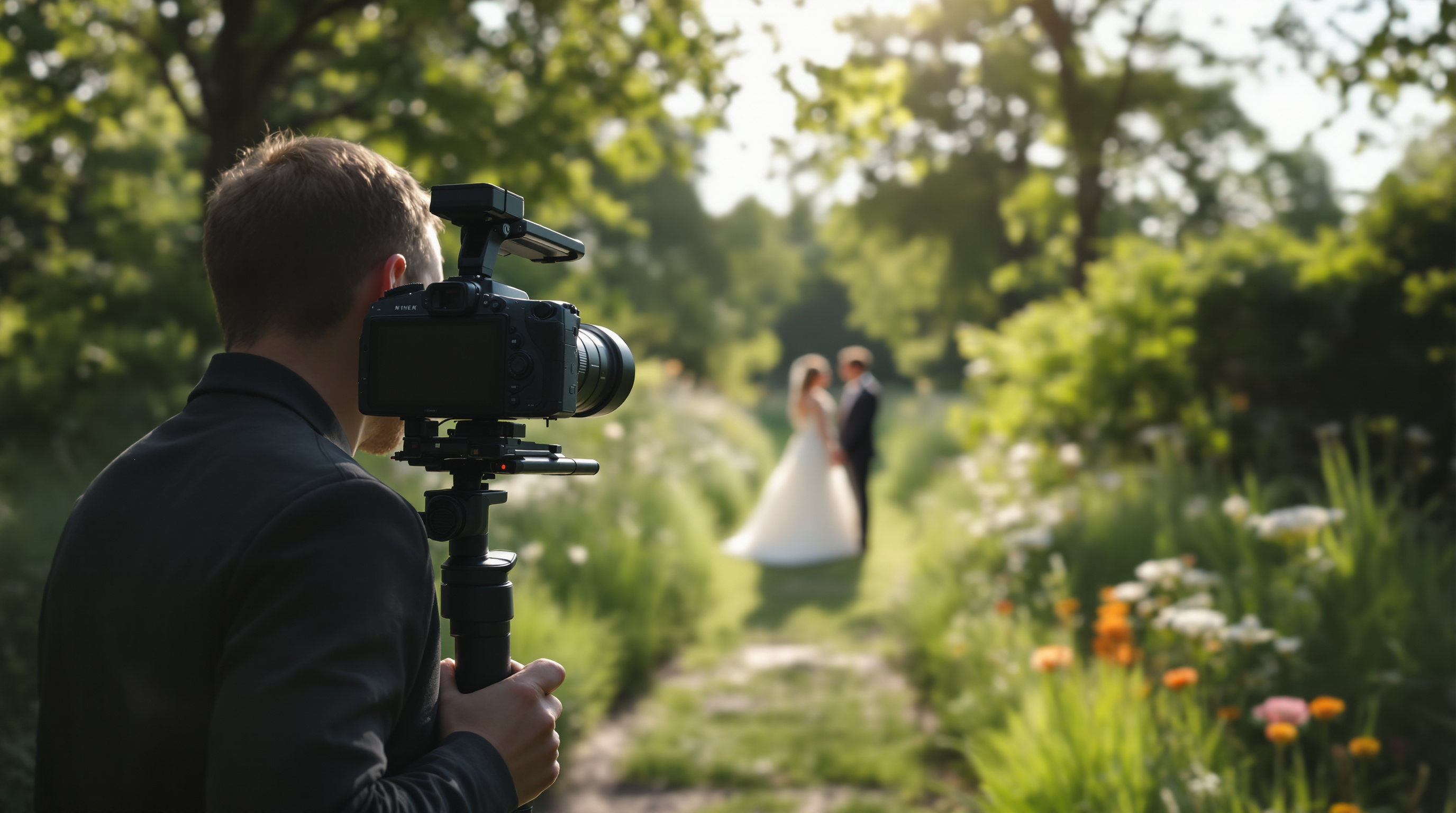
Ask ten couples what they want from their wedding film and you will hear ten different answers — and that is exactly as it should be. A wedding film is a personal thing, and the “style” a videographer works in shapes everything from how the day is shot to how it feels to watch back years later. This guide explains the main wedding video styles you are likely to come across, the difference between a short highlight film and a full-length edit, and the role that music and storytelling play in turning a day into a film.
Cinematic Wedding Films
The cinematic style is the one most couples picture when they imagine a modern wedding film. It borrows the language of the movies: sweeping camera movements, shallow depth of field, careful colour grading, and an emotive musical score. Cinematic films are usually edited into a shorter, highlights-led piece — often three to eight minutes — that distils the whole day into its most beautiful, most moving moments. Slow-motion, drone shots, and dramatic light are all part of the vocabulary.
The strength of the cinematic approach is emotion. Watching a well-made cinematic film feels like watching a trailer for the best day of your life. The trade-off is that, by its nature, it is a curated highlight reel rather than a complete record. Many couples pair a cinematic highlight film with a longer documentary edit so they have both the poetry and the full account.
Documentary Wedding Films
The documentary style — sometimes called reportage or observational — aims to capture the day as it actually unfolded, with as little interference as possible. Here the videographer is a fly on the wall: recording real conversations, unposed reactions, full speeches, and the natural rhythm of the day from start to finish. Documentary films tend to run longer, because the goal is completeness rather than compression.
If you want to hear an entire speech word for word, watch the ceremony in full, or see the small candid moments that a highlight reel would leave out, the documentary approach is for you. It is honest and unhurried, and it ages beautifully — a genuine record of who was there and how the day felt. Many films today blend documentary coverage with cinematic finishing, giving you a truthful account told with a filmmaker’s eye.
Classic and Traditional Films
The classic or traditional style is the long-standing template that many families still love: a straightforward, chronological record of the day, lightly edited, presented in the order that events happened. It prizes clarity and completeness over cinematic flourish, and it is often the most affordable approach. For couples who simply want a clear, warm keepsake of the ceremony, the speeches, and the first dance — without slow-motion or a dramatic score — the classic style does the job with quiet reliability.
Short Film or Feature Edit?
Independent of style, most videographers offer more than one length of edit, and it helps to understand the usual options:
- Teaser or trailer — a one-to-two-minute taste of the day, sometimes turned around within days of the wedding to share online.
- Highlight film — the most popular deliverable, typically three to eight minutes, telling the story of the day in its best moments.
- Feature or documentary edit — a longer film, often twenty minutes to over an hour, covering the ceremony, speeches, and key events in full.
- Full-length coverage — near-complete recordings of the ceremony and speeches, largely unedited, for couples who want everything.
There is no single right answer. Many couples choose a highlight film for sharing and rewatching, plus a longer edit of the ceremony and speeches for the archive. Our guide to planning your wedding film explains how these deliverables map onto coverage levels and cost.
Music and Storytelling
Music is the invisible engine of a wedding film. The right track can turn a simple shot of a couple walking through a garden into something that raises the hair on your arms. A skilled editor chooses music that matches the pace and emotion of each section, and — importantly — licenses it properly, since commercial pop songs cannot legally be used in most delivered films. Reputable videographers use licensed music libraries built for exactly this purpose.
Storytelling is the other half of the craft. A film is more than a sequence of pretty shots; it has a beginning, a middle, and an end. The best editors weave the vows, a line from a speech, or a letter read aloud through the film as a narrative thread, so the finished piece has shape and meaning rather than simply showing what happened. For a broader look at how couples in Ireland approach their wedding films and suppliers, weddingsonline.ie is a useful reference point.
Blended Styles and How Films Are Delivered
In practice, few films are purely one thing. The most common approach today is a blend: documentary-style shooting on the day, so nothing real is missed, finished with cinematic editing and grading so the result is both truthful and beautiful. When you look at a filmmaker’s work, it is less useful to fixate on the label than to ask whether the finished films feel the way you want yours to feel.
It is also worth understanding how films are delivered. Modern wedding films usually arrive as high-resolution digital files — via a private online gallery you can stream and download, and sometimes on a keepsake USB or in a presentation box. Ask how long the files remain available online, whether you receive downloadable copies to keep safely yourself, and in what resolution. A film is a lifetime keepsake, so having your own secure copy matters.
Which Style Is Right for You?
Start from how you want to feel when you watch it back. Crave emotion and beauty above all? Lean cinematic. Want the truth of the day, speeches and all? Lean documentary. Want a simple, complete, no-frills record? The classic style will serve you well. In practice, most modern films borrow from more than one tradition, and the labels matter less than finding a filmmaker whose past work moves you. When you are ready to shortlist, read our guide to choosing a wedding videographer.